

What Is the Dubai Metro Gold Line? Explaining the New Route Planned to Open in 2032 and Its Impact on the Real Estate Market

On April 22, 2026, the Dubai government officially approved a new Dubai Metro line — the Gold Line.
The project is planned as a fully underground metro spanning 42 km with 18 stations and a total investment of approximately AED 34 billion, with an opening date set for September 9, 2032.
Anyone considering purchasing property in Dubai should keep a close eye on areas along the Gold Line corridor.
This is because the Gold Line is a major infrastructure project connecting Dubai’s established urban centres with emerging development areas — one that has the potential to significantly impact property values.
Below, we take a detailed look at the Dubai Metro Gold Line, scheduled to open in 2032, including its route and expected impact on the real estate market.
What Is the Dubai Metro Gold Line?
Source: DXB Media Office
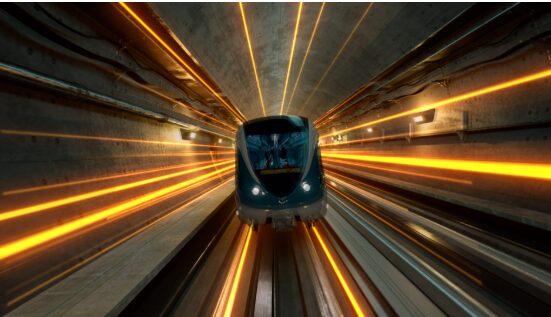
The Dubai Metro Gold Line is a new underground metro line approved by the Dubai government. It is planned to run approximately 40 metres below ground, linking Dubai’s city centre with emerging residential districts.The Gold Line Route
| Item | Details |
| Line Name | Dubai Metro Gold Line |
| Total Length | Approx. 42 km |
| Number of Stations | 18 |
| Total Investment | Approx. AED 34 billion |
| Planned Opening | September 9, 2032 |
| Key Feature | Dubai’s first fully underground metro line |
| Connecting Lines | Red Line, Green Line, Etihad Rail |
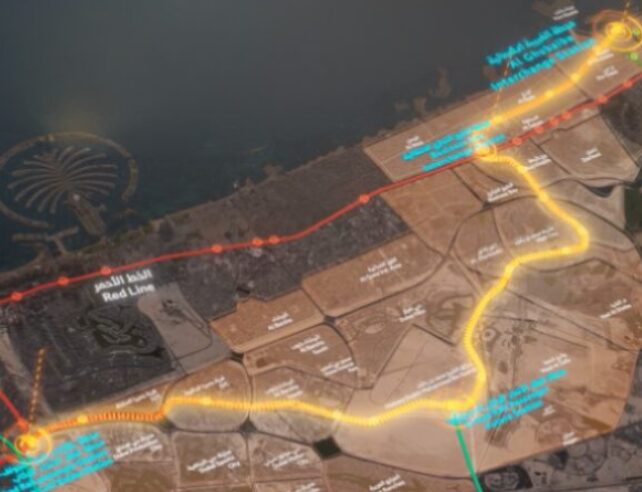
The Gold Line Route
Source ; RTA Instagram
The Gold Line will connect Dubai’s city centre to its emerging residential districts.
Starting from Al Ghubaiба, the line will pass through Mina Rashid, City Walk, Business Bay, Mohammed Bin Rashid City, Nad Al Sheba, Meydan, Al Barsha South, and Jumeirah Village Circle (JVC), before terminating at Jumeirah Golf Estates.
The line will connect to the Red Line at Business Bay and Jumeirah Golf Estates, to the Green Line at Al Ghubaiба, and to Etihad Rail at Meydan and Jumeirah Golf Estates.
In other words, this is not only a route that will make getting around Dubai more convenient — it is a strategically important line that connects into the broader UAE transport network.
The Gold Line’s Impact on the Real Estate Market
Source: https://mediaoffice.ae/en/news/2026/april/22-04/mohammed-bin-rashid-approves-dubai-metro-gold-line
The Gold Line has the potential to significantly influence Dubai’s real estate market.
The reason is straightforward: properties located near metro stations tend to benefit from greater convenience for commuting, schooling, shopping, and tourism — factors that drive both rental and sales demand.
The Roads and Transport Authority (RTA) has noted that the Gold Line development could lead to property value increases of up to 20% in areas surrounding the new stations.
In particular, the following types of areas are drawing attention from a real estate investment perspective:
Areas to watch from an investment standpoint:
- Areas where residential demand is expected to grow
- Areas with access to both the Red and Green Lines
- Established central areas that already see high demand
- Areas with access to Etihad Rail
It is worth noting that property prices are not determined by metro access alone — the developer, completion timeline, surrounding amenities, and supply-demand balance all play a role. That said, when viewed over the medium to long term, transport infrastructure improvements have a meaningful impact on property values.
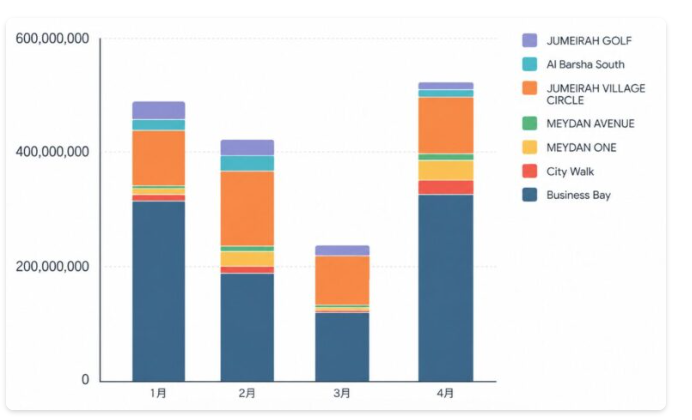
Areas That Will Benefit Most from the Gold Line
Source:https://dubailand.gov.ae/en/open-data/real-estate-data/
The following areas are expected to see the greatest improvements in accessibility once the Gold Line opens. Even amid shifting market conditions, these Gold Line corridors are attracting attention as areas poised for improved long-term connectivity — and real estate transaction volumes have already risen by approximately double compared to the previous month.
(1) Business Bay
Business Bay is a business and commercial hub located in the heart of Dubai.
It is already a highly sought-after area, home to offices, hotels, restaurants, and residences, with easy access to Downtown Dubai. The addition of the Gold Line is expected to further enhance commuting convenience and strengthen its appeal.
(2) City Walk
City Walk is a popular destination packed with retail, restaurants, and tourist attractions.
Improved access for visitors is expected to have a positive knock-on effect on rental and commercial demand in the surrounding area.
(3) Meydan
Meydan is one of Dubai’s large-scale development zones with strong future growth potential.
The area is seeing active residential and commercial development and is included in the planned interchange between the Gold Line and Etihad Rail — making it a prime area for investors with a long-term outlook.
(4) Jumeirah Village Circle (JVC)
JVC is one of Dubai’s most popular residential communities.
It offers a relatively accessible price range and is well-liked by families and young professionals. One of JVC’s current drawbacks is its reliance on private vehicles — something the Gold Line is expected to address significantly once in operation.
(5) Al Barsha South
Al Barsha South is an area with growing residential demand.
With schools and commercial facilities nearby, it already has strong lifestyle appeal. Improved access to the city centre via the Gold Line is expected to further increase its residential attractiveness.
(6) Jumeirah Golf Estates
Jumeirah Golf Estates is a leafy, upscale residential community.
As the planned terminal station of the Gold Line — with connections to both the Red Line and Etihad Rail — the strengthening of its transport infrastructure is expected to support long-term appreciation in property values.
Conclusion
The Dubai Metro Gold Line is a landmark transport project scheduled to open on September 9, 2032.
As a fully underground metro spanning 42 km with 18 stations and a total investment of approximately AED 34 billion, it will connect Al Ghubaiба to Jumeirah Golf Estates while linking into the Red Line, Green Line, and Etihad Rail.
Areas such as Meydan, JVC, Al Barsha South, Jumeirah Golf Estates, and Business Bay are particularly well-positioned to see growing property demand as transport accessibility improves.
For anyone considering buying or investing in Dubai real estate, it is important to look beyond price and yield alone and factor in future transport infrastructure when selecting an area.
The Gold Line corridor is one to watch closely as Dubai’s property market continues to evolve.